
For the better part of two decades, Dodge pulled off something most brands only dream about. It made itself a synonym. Say “muscle car” and the image of a wide-body Charger or Challenger lighting up its rear tires pops into your brain. That kind of clarity bought Dodge credibility in the muscle car space and a loud, brash voice nobody else in Detroit could touch. It also came with a catch. By turning itself into the badass muscle brand, Dodge quietly painted itself into a corner of the market that’s narrow, graying, and badly out of step with where buyers actually spend their money. The thing that makes Dodge special is the same thing capping it, and in 2025 that bill came due.
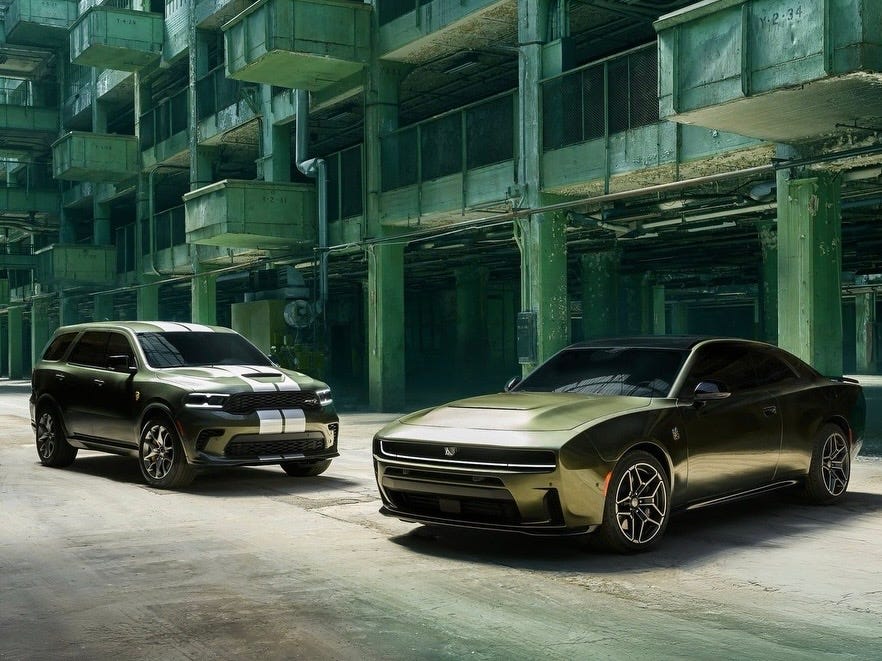
The numbers are ugly. Dodge sales dropped roughly 28 percent in 2025, falling from about 141,700 units to just 101,927. What stings more is which vehicle kept the lights on. The Durango, a three-row SUV riding a platform that dates back to 2011, accounted for more than 81,000 of those sales and actually grew about 37 percent that year. That means the oldest, least “Dodge” product in the showroom is now carrying the entire brand while the halo muscle car, the new Charger, flounders. For a company whose whole personality runs on performance theater, getting bailed out by a fifteen-year-old family hauler is a quiet admission that something went sideways.
The buyer math is why the muscle-first bet was always going to hit a wall. Survey after survey pegs the muscle-car crowd at roughly 80 percent male, median age around 51, and culturally conservative. Loyal, yes, but a finite group that’s slowly aging out. Dodge loves to brag that it pulls the youngest, most diverse buyers in the segment, and that’s true if you only stack it against Mustang and Camaro. Those are all shrinking ponds. Meanwhile the rest of the industry spent fifteen years piling into crossovers and SUVs that sell to absolutely everyone: families, commuters, first-time buyers, women, every income bracket you can name. A brand built on “loud, fast, and menacing” is more or less choosing to sit out the segments where the real volume lives.
When Dodge did try to broaden, it missed badly, and it missed in two opposite directions. The electric Charger Daytona was supposed to drag the muscle identity into the future. Instead it spooked the gas-loving faithful and never won over EV shoppers, moving a measly 7,421 units in 2025 before cratering to roughly 346 in the fourth quarter once the federal tax credit vanished.
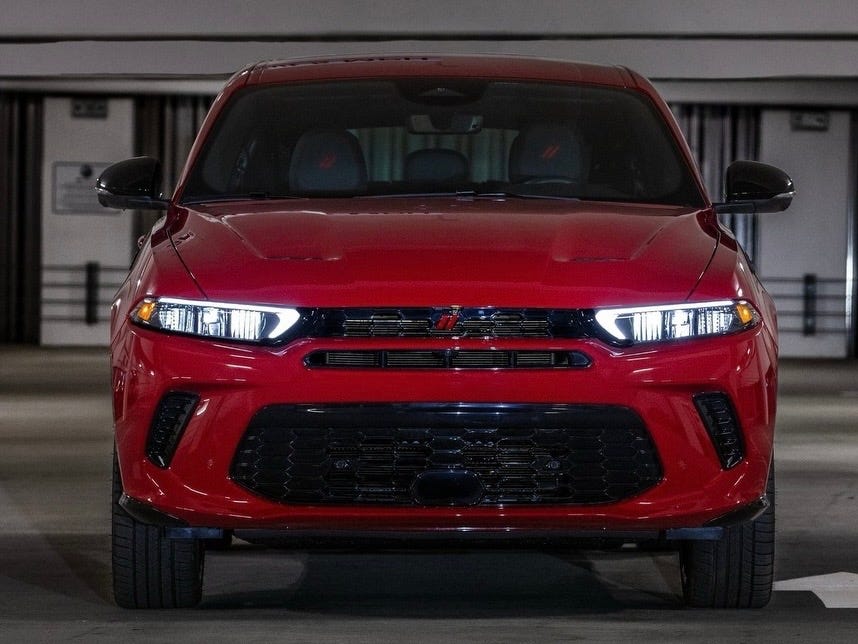
The Hornet was the mirror image, as it was a slightly restyled Alfa Romeo Tonale aimed squarely at the mainstream crossover shopper, entering a sensible with a vehicle that promises the exact opposite of sensible. It managed about 9,365 sales, down more than 50 percent, sunk by pricing that didn’t fit its slot and a non-established nameplate. The Charger EV was too weird for the believers, while the Hornet was too boring for the brand and too risky for practical compact crossover shoppers who associated Dodge with powerful, tire-squealing cars, not family movers. Together they show just how little room Dodge has to move.
The clearest proof of the trap is the great walk-back now underway. After Stellantis bled a staggering net loss of roughly $26 billion in 2025, much of it tied to a mistimed EV push, the company hauled Tim Kuniskis back into the building. He promptly stuffed the Hemi V8 back into the Ram, fired the SRT division back up, and has all but confirmed a supercharged Hellcat is headed for the Charger. This is the guy who publicly called killing the Hemi “a huge mistake.” Strip away the spin and it reads like a confession. The EV-and-crossover experiment flopped, so Dodge is sprinting straight back to the loud V8 identity that happens to be both its only durable equity and the very thing fencing in its audience. Even the new gas Charger leans on a turbocharged inline-six in its volume trims instead of a proper V8, which is an odd hand to play for a Mopar muscle car and risks pleasing nobody completely.
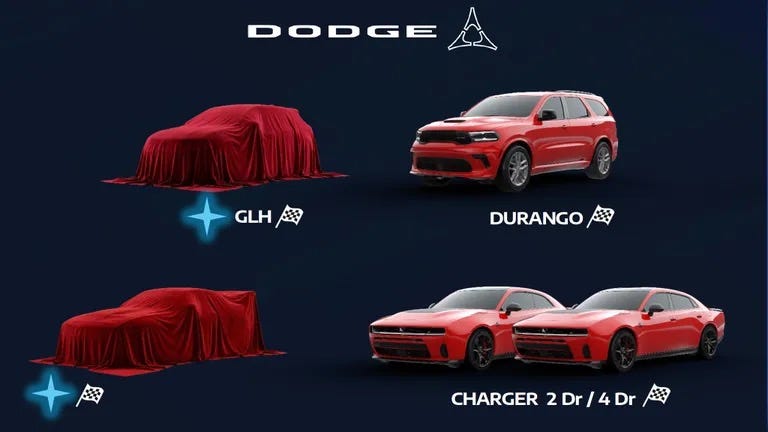
The lineup Dodge rolled out at Stellantis’s May 21 Investor Day, the centerpiece of the new “FaSTLAne 2030” plan, embodies The Dodge Dilemma. The brand’s fix for not enough appeal is to bolt an SRT badge onto everything in its lineup.
At the top of the lineup will be the Copperhead SRT, a clay-model halo coupe pitched as the Viper’s spiritual heir, towering Superbird-style wing and all, reportedly packing a blown V8 with no EV version and maybe even a manual. It’s a love letter to the diehards and it widens the funnel by precisely nothing.
The smarter reveal was the GLH, which resurrects the old 1980s “Goes Like Hell” badge and which Kuniskis flat out compared to the Hornet, but developed “the way we should have done it the first time.” Picture a roughly 300-horsepower muscle hatch that splits the difference between a hatchback and a crossover, riding on the cheaper new STLA One architecture. The GLH is also getting an SRT variant.
Here’s The Dodge Dilemma boiled down to one line. The brand can’t grow without watering down the only thing that makes it interesting, and it can’t stay pure without shrinking toward a devoted but finite crowd. Going all-in on muscle juices the base and the headlines, but it just reconfirms the ceiling. Chasing crossovers and EVs goes after volume, but it strands twenty years of hard-won equity. The GLH points at the one road that might actually work, affordable performance aimed at younger and more diverse enthusiasts, the lone spot where Dodge really does punch above its weight. But the reflex to staple an SRT badge onto it, and onto everything else, gives the game away. This is a brand that still hasn’t decided whether it wants to be a disciplined, profitable niche player or a full-line automaker it no longer has the sales to support. Until it answers that question, every new launch is going to keep slamming into the same wall Dodge built for itself.